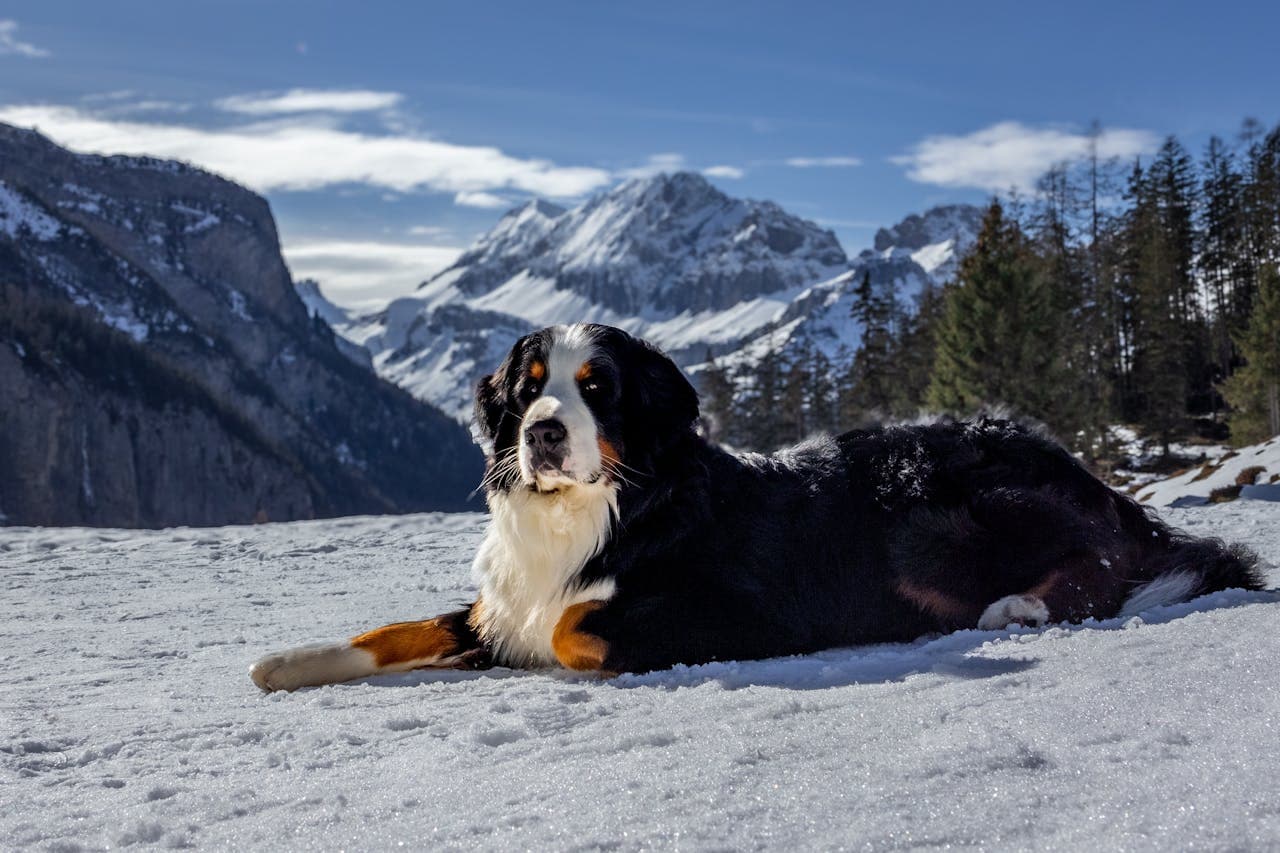
The Bernese Mountain Dog is a large, sturdy working breed known for its calm disposition, gentle nature, and striking tricolor coat. Developed in Switzerland, particularly in the canton of Bern, these dogs served as farm companions, draft dogs pulling carts, and watchdogs for livestock and property. Their balanced temperament, impressive strength, and willingness to work made them invaluable on small farms in the Swiss Alps.
According to the American Kennel Club (AKC), the Bernese Mountain Dog is one of the most popular large working breeds. Their popularity stems from their affectionate, family-oriented temperament and their ability to be both dignified and playful. When given appropriate exercise, thoughtful training, and plenty of time with their people, Berners make devoted family companions, gentle play partners for respectful children, and impressive participants in activities such as draft work, obedience, rally, and therapy visits.
Breed History & Origin
The Bernese Mountain Dog is one of four Swiss mountain dog breeds and is the only one with a long coat. The breed’s ancestors likely accompanied Roman soldiers as mastiff-type farm and guard dogs, later mixing with local farm dogs in the Swiss Alps. Over time, farmers in the region refined these dogs into strong, versatile workers who could pull carts loaded with dairy products, accompany cattle to pasture, and serve as loyal guardians of the homestead.
In the late 19th and early 20th centuries, dedicated Swiss fanciers worked to preserve and promote the Bernese Mountain Dog as industrialization reduced the need for traditional farm work. The breed began to spread beyond Switzerland and eventually reached North America, where its gentle temperament and eye-catching appearance quickly earned admirers. The AKC formally recognized the Bernese Mountain Dog in 1937, and the Bernese Mountain Dog Club of America (BMDCA) now serves as the breed’s parent club in the United States. Today, Berners are cherished as family companions, therapy dogs, and working partners in draft and farm activities.
Physical Characteristics & Breed Standards
Bernese Mountain Dogs are large, powerful, and strongly built, yet they should appear balanced and athletic rather than cumbersome. According to the AKC breed standard, they are slightly longer than tall, with a level topline, strong bone, and a proud carriage that reflects their heritage as draft and farm dogs. Their hallmark is a rich tricolor coat—jet black with rust and clear white markings—and a gentle, intelligent expression that hints at their affectionate nature.
| Characteristic | Male | Female |
|---|---|---|
| Height | 25–27.5 inches | 23–26 inches |
| Weight | 80–115 pounds | 70–95 pounds |
| Lifespan | 7–10 years | |
| Coat Type | Thick, moderately long, weather-resistant double coat; straight to slightly wavy | |
| Common Colors | Classic tricolor: jet black background with rich rust and clear white markings in a specific pattern | |
Key Physical Features: Bernese Mountain Dogs have a broad, slightly rounded skull with a strong but not coarse muzzle and a well-defined stop. Dark brown, oval eyes convey a gentle, thoughtful expression. Ears are medium-sized, triangular, and set high, lying close to the head when at rest. The full, bushy tail is carried low when relaxed and may lift slightly when the dog is alert, but should not curl over the back. Their movement is steady, balanced, and ground-covering, reflecting their history as dogs who worked all day in fields and along mountain paths.
Temperament & Personality
Bernese Mountain Dogs are renowned for their sweet, easygoing temperament. They are typically calm, affectionate, and eager to please, forming very strong bonds with their families. Most Berners enjoy being close to their people and may follow their favorite humans from room to room, content simply to be part of daily life. Their demeanor is often described as “gentle giant” when they are properly bred, socialized, and trained.
Berners are usually friendly or politely reserved with strangers but should not be fearful or aggressive. Many will offer a deep bark to announce visitors, making them effective natural watchdogs, but they are rarely true guard dogs. Early, positive socialization helps prevent shyness and supports a confident, stable temperament that can handle new situations, guests, and public environments with ease.
While Bernese Mountain Dogs enjoy play and outdoor adventures, they are generally less intense and hyperactive than many herding or sporting breeds. However, they are sensitive and may become worried or shut down in response to harsh corrections or chaotic environments. Gentle, consistent guidance and a predictable routine help them thrive. Because they are so attached to their families, some Berners may be prone to separation anxiety if left alone for long stretches on a regular basis.
Exercise Requirements by Life Stage
As large working dogs, Bernese Mountain Dogs require regular daily exercise to maintain healthy weight, muscle tone, and mental well-being. Their exercise needs are moderate to moderately high: they enjoy brisk walks, hikes in cooler weather, and opportunities to move freely, but they are not built for intense, high-impact activities over long periods. Growing puppies in particular must be protected from over-exercise to reduce stress on developing joints.
| Life Stage | Daily Exercise | Recommended Activities |
|---|---|---|
| Puppies (8 weeks - 12 months) | Short, frequent sessions; roughly 5 minutes per month of age, 2x daily, avoiding high-impact exercise | Short walks on soft surfaces, gentle play, basic obedience, socialization, controlled exploration; avoid long runs, stairs, and repetitive jumping |
| Adults (1-7 years) | 1–1.5 hours total, split into sessions | Brisk walks, moderate hikes in cool weather, carting/draft work, structured obedience, nosework, low- to moderate-impact games like fetch on grass |
| Seniors (7+ years) | 30–45 minutes, adjusted for mobility and health | Gentle walks, swimming where appropriate, light play, sniff walks, low-impact brain games and puzzle toys |
Mental Exercise: Bernese Mountain Dogs benefit greatly from mental enrichment. Incorporate scent games, puzzle feeders, basic and advanced obedience, draft/cart work, rally, trick-training, and interactive toys into their routine. Many Berners enjoy activities that allow them to use their brains and their bodies without excessive pounding on their joints.
Grooming & Maintenance Schedule
Bernese Mountain Dogs have a thick, double coat designed to protect them from cold and wet conditions. The outer coat is moderately long and straight or slightly wavy, while the undercoat is dense and soft. Berners shed year-round and typically experience heavier seasonal shedding once or twice a year as they “blow” their undercoat. Regular grooming is essential to control shedding, prevent mats, and keep the coat and skin healthy.
| Grooming Task | Frequency | Tools/Notes |
|---|---|---|
| Brushing (regular season) | 2–3 times per week | Pin brush, slicker brush, and undercoat rake; focus on behind ears, legs, chest, and tail to prevent mats |
| Brushing (shedding season) | Daily or every other day | Undercoat rake, de-shedding tool, and thorough line brushing to remove loose undercoat |
| Bathing | Every 6–8 weeks or as needed | Dog-specific shampoo and conditioner; ensure thorough rinsing and drying due to dense coat |
| Nail trimming | Every 2–3 weeks | Trim or grind; nails should not click loudly on hard floors and should not splay the toes |
| Ear cleaning | Weekly check, clean as needed | Veterinary ear cleaner and cotton balls; monitor for redness, odor, or debris in drop ears |
| Dental care | Daily (ideal) or at least 3x per week | Dog toothbrush and toothpaste; consider dental chews or water additives as recommended by your veterinarian |
Nutrition & Feeding Guidelines
Proper nutrition is critical to support the Bernese Mountain Dog's large frame, joint health, and overall well-being. As a large working breed with a relatively short lifespan, Berners benefit from high-quality diets formulated for large-breed dogs, particularly during the growth phase. Controlled growth in puppies helps reduce stress on developing bones and joints and may lower the risk of some orthopedic issues later in life.
| Life Stage | Protein | Fat | Daily Amount (Dry Food) | Meals/Day |
|---|---|---|---|---|
| Puppies (2–12 months, large-breed formula) | 22–26% | 10–16% | Varies by age/weight; follow vet and food label guidance for large-breed puppies | 3–4 |
| Adults (moderately active) | 20–26% | 10–16% | ~3–5 cups (split into meals), adjusted for weight, metabolism, and activity level | 2 |
| Adults (highly active/working) | 24–30% | 14–20% | ~4–6 cups, adjusted based on workload, body condition, and veterinary guidance | 2–3 |
| Seniors (7+ years) | 18–24% | 8–14% | 2.5–4 cups, tailored to weight, activity, and joint health; consider senior or joint-support formulas | 2 |
Essential Nutritional Considerations: Choose formulas that list high-quality animal proteins (such as chicken, turkey, beef, lamb, or fish) as the first ingredient. Controlled calories and appropriate calcium-to-phosphorus ratios are especially important for large-breed puppies. Omega-3 and Omega-6 fatty acids support joint, skin, and coat health, while supplements such as glucosamine and chondroitin may be beneficial for joint support. Because Bernese Mountain Dogs can be prone to obesity and certain health conditions, work closely with your veterinarian to choose the best diet and maintain an ideal body condition score throughout life.
Bloat Prevention: Bernese Mountain Dogs, like many large and deep-chested breeds, are at increased risk for gastric dilatation-volvulus (GDV or bloat), a life-threatening emergency. To help reduce risk, divide daily food into two or more meals, discourage rapid gulping (use slow-feeder bowls if needed), avoid heavy exercise for about an hour before and after meals, and discuss with your veterinarian whether a preventive gastropexy surgery is appropriate. Seek emergency veterinary care immediately if you suspect bloat.
Health Considerations & Genetic Screening
Bernese Mountain Dogs are generally robust and capable in their working roles, but the breed is known for certain health challenges, particularly a relatively short average lifespan and an increased incidence of some cancers. Responsible breeders use health testing, pedigree research, and careful selection to reduce the risk of inherited diseases. Prospective owners should be familiar with common concerns and always request documentation of health clearances when choosing a puppy.
Common Health Conditions
| Condition | Prevalence | Description |
|---|---|---|
| Hip Dysplasia | Significant breed concern | Abnormal hip joint development leading to arthritis, pain, and reduced mobility; weight management and appropriate exercise are important preventive measures |
| Elbow Dysplasia | Notable risk in large breeds | Developmental abnormalities in the elbow joint that can cause lameness and arthritis; often managed with a combination of medical and sometimes surgical treatment |
| Hereditary Cancers | Major breed health challenge | Berners have an increased incidence of certain cancers, including histiocytic sarcoma, lymphoma, mast cell tumors, and osteosarcoma; careful breeding and early detection are priorities |
| Degenerative Myelopathy (DM) | Documented in the breed | Progressive neurologic disease causing weakness and paralysis of the hind limbs; DNA testing helps identify at-risk dogs for breeding |
| Hereditary Eye Diseases | Recognized concern | Includes cataracts and Progressive Retinal Atrophy (PRA), among other conditions; regular eye exams by a veterinary ophthalmologist are recommended for breeding dogs |
| Autoimmune Thyroiditis | Recognized risk in the breed | Immune-related thyroid disease that can lead to hypothyroidism, causing lethargy, weight gain, and coat changes; diagnosed with blood tests and typically managed with medication |
AKC Recommended Health Screenings
The AKC and the Bernese Mountain Dog Club of America (BMDCA) recommend comprehensive health testing for breeding dogs. Always request copies of official health clearances when purchasing a puppy from a breeder:
| Screening Test | Testing Authority | Purpose |
|---|---|---|
| Hip Evaluation | OFA or PennHIP | Screen for hip dysplasia and assess joint quality prior to breeding |
| Elbow Evaluation | OFA | Screen for elbow dysplasia and other developmental elbow abnormalities |
| Ophthalmologist Evaluation | ACVO/OFA Eye Certification | Screen for hereditary eye diseases such as cataracts and PRA |
| Cardiac Evaluation | OFA or board-certified cardiologist | Screen for congenital or inherited heart disease |
| Von Willebrand Disease DNA Test | OFA or other approved lab | Detect carriers or affected dogs with this hereditary bleeding disorder |
| Degenerative Myelopathy (DM) DNA Test | OFA or certified laboratory | Identify dogs that are at risk, carriers, or clear for DM-associated mutations |
Training & Socialization
Bernese Mountain Dogs are intelligent, eager-to-please, and generally very willing learners. They often have a thoughtful, somewhat sensitive nature and may mature more slowly than some other working breeds, both physically and mentally. With patient, consistent training, Berners can excel in basic manners, obedience, draft work, and even performance sports like rally and tracking.
Early Socialization: Begin socialization early, ideally between 3–14 weeks of age. Introduce your Berner puppy to a variety of people, dogs, environments, surfaces, and sounds in a positive, controlled way. This helps prevent shyness and promotes a confident adult dog who can handle busy households, visitors, veterinary visits, and travel without undue stress.
Training Approach: Positive reinforcement methods—using food rewards, toys, praise, and play—work best for Bernese Mountain Dogs. Because they are sensitive and deeply bonded to their people, harsh corrections can undermine trust and cause worry or withdrawal. Keep training sessions short and upbeat, with plenty of breaks and variety. Focus on foundational cues like sit, down, stay, come, loose-leash walking, and polite greetings, then build toward more advanced skills or activities such as draft/cart work and rally.
Recommended Training Programs: Consider AKC S.T.A.R. Puppy, Canine Good Citizen (CGC), and Community Canine (CGCA) as foundations for manners and reliability. Many Berners enjoy carting/draft trials, obedience, rally, tracking, and therapy dog work. These activities offer a productive outlet for their desire to work closely with their people while remaining at a reasonable physical intensity for a large breed.
Working Roles & Capabilities
Bernese Mountain Dogs were originally bred as multipurpose farm dogs, and many still enjoy having a “job” to do today. Their combination of strength, trainability, and gentle temperament lends itself to a variety of roles:
- Draft & Cart Work: Historically, Berners pulled carts loaded with milk and other goods. Today, many participate in draft and carting sports, happily working alongside their owners in harness.
- Farm & Homestead Companions: Berners can still function as steady farm dogs, accompanying livestock, watching over property, and serving as calm, reliable partners in daily chores.
- Dog Sports: While not as fast as some lighter breeds, Berners can participate in obedience, rally, tracking, and even agility at an appropriate level. Their desire to work with their people makes these activities rewarding.
- Therapy & Comfort Dogs: The gentle, people-focused nature of Berners makes them excellent candidates for therapy work in hospitals, schools, and care facilities when they have a stable temperament and solid manners.
- Search & Rescue / Detection: Some Berners work in search and rescue or scent detection roles, using their noses, stamina, and cooperative temperament to assist handlers.
- Family Companions: For many owners, a Berner’s most important job is being a loving family member—joining in on hikes during cool weather, camping trips, and relaxed adventures with their favorite people.
Frequently Asked Questions
Are Bernese Mountain Dogs good family dogs?
Yes, Bernese Mountain Dogs are often wonderful family dogs for households that understand and can accommodate a large breed. They are typically affectionate, patient, and gentle with children who interact respectfully. Their calm temperament and desire to be near their people make them devoted companions. Because of their size and strength, supervision around very small children is important, and families should teach kids appropriate ways to interact with dogs.
How much does a Bernese Mountain Dog puppy cost?
Prices vary by region, pedigree, and breeder practices. From reputable breeders who perform extensive health testing, participate in breed clubs, and raise puppies in enriched environments, Bernese Mountain Dog puppies often range from around $1,500–$3,500 or more. Puppies from lines with strong performance, health, or show records may be higher. Be cautious of unusually low prices or sellers who do not provide health clearances, detailed contracts, or support after purchase.
Do Bernese Mountain Dogs shed a lot?
Yes. Berners are heavy shedders due to their dense double coat. They shed throughout the year and typically “blow coat” heavily once or twice annually, especially in spring and fall. Regular brushing (several times per week, and more frequently during shedding seasons) helps manage loose hair and prevent mats. Prospective owners should be comfortable with daily sweeping or vacuuming and finding dog hair on clothes and furniture.
Are Bernese Mountain Dogs aggressive?
Well-bred, well-socialized Bernese Mountain Dogs are not inherently aggressive. The breed standard calls for a dog that is good-natured, self-assured, and gentle. Berners may be reserved with strangers and can be protective of their family, but overt aggression is not typical. Poor socialization, pain, fear, or harsh handling can contribute to behavior problems in any dog, so early positive training, careful socialization, and appropriate management are essential.
Can Bernese Mountain Dogs live in apartments?
Apartment living is possible for some Bernese Mountain Dogs, but it requires a dedicated owner and a realistic understanding of the breed’s needs. Berners are large, heavy dogs that require daily walks, mental stimulation, and enough space to move comfortably. Stairs can be tough on their joints, and they are sensitive to heat, so climate and building layout matter. Multiple daily outings, structured exercise, and enrichment activities are essential if a Berner lives in an apartment or smaller home.
What is the difference between European and American lines in Bernese Mountain Dogs?
Both European and American lines of Bernese Mountain Dogs share the same essential breed standard, but individual breeders may emphasize slightly different traits. Some European lines focus strongly on traditional working ability and substance, while certain American lines may place more emphasis on show-ring style and coat. Regardless of origin, responsible breeders prioritize health, temperament, and sound structure. Prospective owners should focus less on labels and more on the individual breeder’s ethics, health testing, and how well a particular puppy’s temperament and energy level match their lifestyle.
Is a Bernese Mountain Dog Right for You?
Bernese Mountain Dogs are best suited for:
- Families or individuals who appreciate large, gentle, people-oriented dogs
- Owners who can provide at least 1–1.5 hours of moderate physical activity and mental enrichment most days
- People who enjoy cooler-weather outdoor activities such as hiking, walking, and camping, and who can avoid strenuous exercise during heat and humidity
- Those willing to manage heavy shedding and regular grooming, including brushing and coat maintenance, throughout the year
- Homes with enough space—ideally with a securely fenced yard or safe off-leash exercise areas—for a large dog to move comfortably
- Owners committed to responsible veterinary care, including proactive screening and preparedness for potential health issues common in the breed
- People who understand the emotional and financial responsibilities of sharing life with a large breed that may have a shorter average lifespan
Bernese Mountain Dogs may not be ideal for those seeking a low-maintenance or very long-lived dog, people who dislike heavy shedding, or families who are away from home most of the day and unable to provide companionship and exercise. When their physical, emotional, and health needs are met, Berners reward their people with deep devotion, gentle affection, and a rich, if sometimes all-too-brief, partnership.
References & Resources
- 1. American Kennel Club (AKC). "Bernese Mountain Dog Breed Standard." akc.org
- 2. Bernese Mountain Dog Club of America (BMDCA). "Health & Genetics and Breed Information."
- 3. Berner-Garde Foundation. "Bernese Mountain Dog Health, Pedigree, and Longevity Information."
- 4. Orthopedic Foundation for Animals (OFA). "Breed Statistics for Bernese Mountain Dogs."
- 5. AKC Canine Health Foundation. "Cancer and Genetic Disease in Large and Giant Dog Breeds."
- 6. BMDCA and Berner-Garde. "Health Surveys and Recommendations for Bernese Mountain Dog Owners and Breeders."
- 7. BMDCA. "Guidelines for Responsible Breeding of Bernese Mountain Dogs."
- 8. Various veterinary nutrition resources on feeding and managing large and giant working breeds, with emphasis on joint support and bloat prevention.